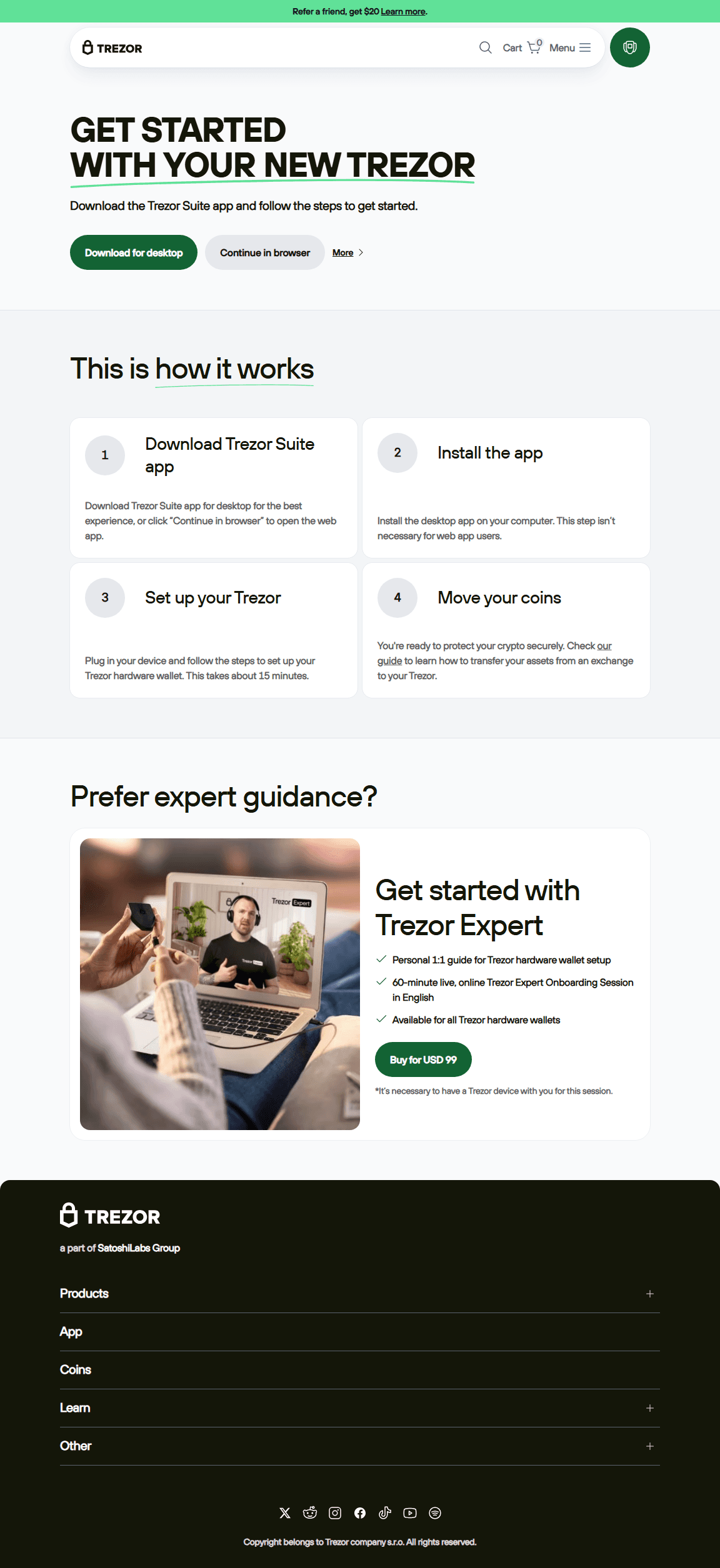
Trezor.io/Start – Complete Guide to Setting Up Your Trezor Hardware Wallet
Protecting your cryptocurrency with a hardware wallet is one of the safest decisions you can make, and Trezor.io/start is the official setup portal that guides you through the process. Whether you are using a Trezor Model One or a Trezor Model T, this step-by-step guide will help you understand exactly how to begin, what to expect, and how to secure your digital assets effectively. This article provides a clear, detailed walkthrough of everything you need to know when visiting Trezor.io/start for the first time.
What Is Trezor.io/Start?
Trezor.io/start is the official onboarding page for new Trezor users. When you unbox your Trezor hardware wallet, you will find instructions directing you to this link. The page provides essential steps to set up your device, install necessary software, generate a recovery seed, and create a secure environment for storing your cryptocurrencies.
It is important to always use the official website and avoid third-party sources, as hardware wallet safety depends heavily on following authentic instructions.
Requirements Before You Begin
Before heading over to Trezor.io/start, make sure you are prepared with the following:
A new or factory-reset Trezor hardware wallet
A computer or mobile device with an internet connection
A USB cable compatible with your model
A safe place to store your recovery seed
Updated operating system and browser (Chrome, Brave, Firefox, or Edge)
Having these items ready ensures a smooth setup experience.
Step 1: Visit Trezor.io/Start
Open your browser and type Trezor.io/start into the address bar. Double-check that the URL is correct. This page will automatically detect your device model once connected or will provide model-based navigation options.
Step 2: Install Trezor Suite
The setup page will prompt you to download Trezor Suite, the official desktop application used to manage your crypto assets. Trezor Suite is available for Windows, macOS, and Linux.
What Trezor Suite Does:
Allows you to manage Bitcoin and other cryptocurrencies
Displays your account balances
Enables secure transaction signing
Provides portfolio tracking and management
Offers optional privacy tools like Tor integration
Download and install the application following the instructions provided.
Step 3: Connect Your Trezor Device
Using the provided USB cable, connect your Trezor wallet to your computer. Trezor Suite should automatically detect the device and begin the setup procedure. If your device requires a firmware update, you will be prompted to install the latest version. This is normal and ensures maximum security.
Step 4: Create a New Wallet
You will now be given the option to Create a new wallet or Recover an existing wallet. Choose “Create new wallet” if this is your first time using the device.
Trezor will then prompt you to generate a Recovery Seed, one of the most critical parts of your hardware wallet setup.
Step 5: Write Down Your Recovery Seed
Your Trezor wallet will display a 12-word, 18-word, or 24-word recovery seed depending on the model and settings. This seed is the master key to all your funds. Anyone who has this seed can access your crypto, even without the physical device.
Important rules:
Write the seed on paper, not on your computer or phone
Never take a photo of the seed
Never store it online
Keep the paper in a safe, offline location
Consider duplicating it and storing copies separately
Without this recovery seed, Trezor cannot help you recover your wallet if the device is lost or damaged.
Step 6: Set a Strong PIN
Next, Trezor Suite will ask you to create a secure PIN. This PIN protects your device from physical access. Select a number that is not easily guessed and never share it with anyone.
You will enter the PIN directly using the interface shown on your device or within the app, depending on your model.
Step 7: Access Your Wallet Dashboard
Once setup is complete, you will enter the Trezor Suite dashboard. This is where you can:
View your crypto accounts
Send and receive funds
Track your portfolio value
Add multiple accounts
Integrate privacy features
Connect with third-party apps and exchanges
The dashboard is user-friendly, even for beginners, and provides all the tools you need in one secure environment.
Security Tips After Setup
Even after completing the steps at Trezor.io/start, maintaining long-term security is essential. Here are some important best practices:
Keep your recovery seed hidden and protected
Do not share your PIN or seed with anyone
Always verify transaction addresses on the device screen
Use the latest firmware and Trezor Suite updates
Avoid connecting your device on public or untrusted computers
Enable optional passphrases for enhanced protection
A hardware wallet is extremely secure, but only if you follow proper security protocols.
Troubleshooting Common Issues
Device Not Detected
Try a different USB port or cable, and ensure Trezor Suite is installed correctly.
Firmware Update Not Working
Restart the device and computer; follow on-screen prompts carefully.
Recovery Seed Mismatch
Double-check your handwriting and spelling. Each word must match the official BIP-39 list.
Final Thoughts
Setting up your hardware wallet through Trezor.io/start is simple, but every step is crucial for securing your digital assets. Trezor’s combination of physical security, open-source software, and user-friendly interface makes it one of the most trusted crypto storage solutions available. By following the instructions carefully, keeping your recovery seed safe, and practicing good security habits, you can confidently manage and protect your cryptocurrencies for the long term.