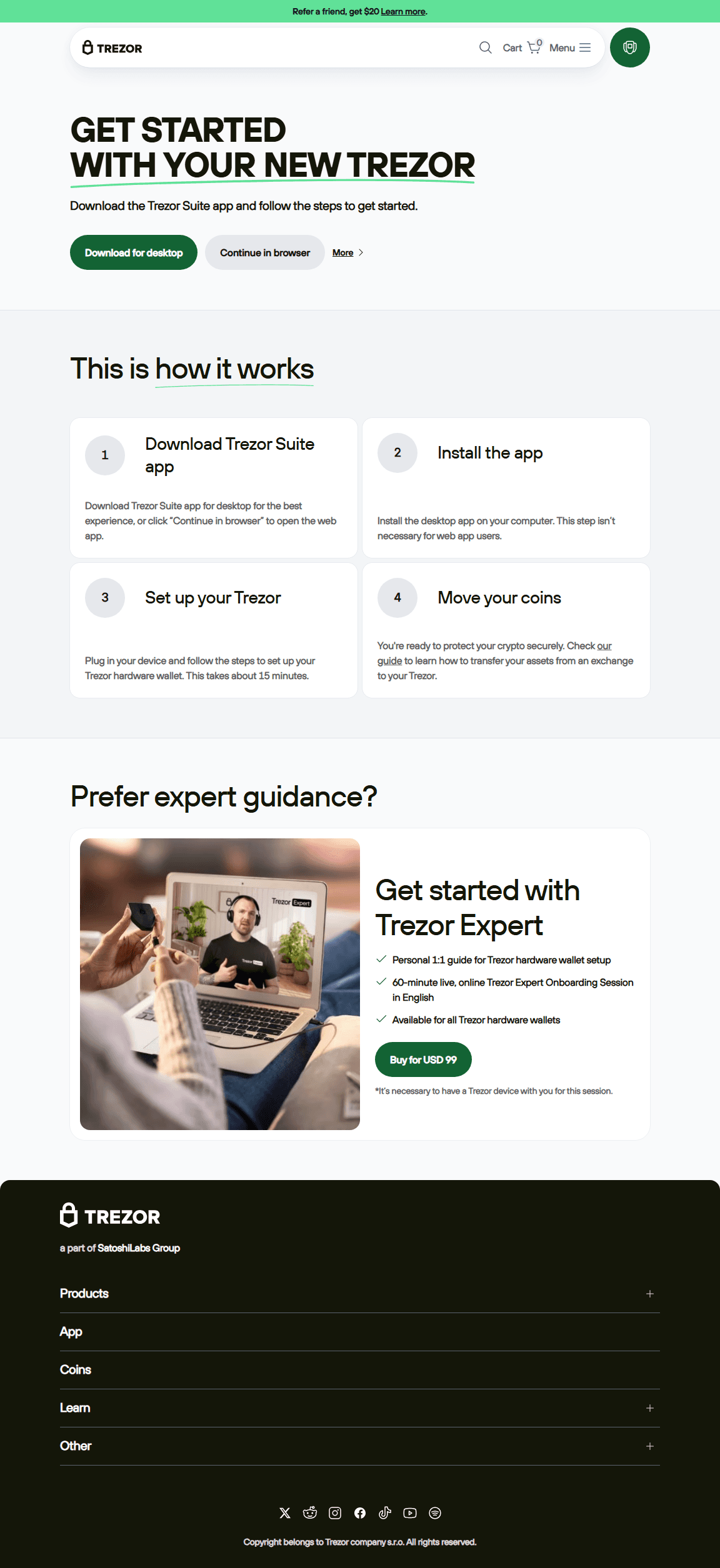
Trezor.io/Start – Step-by-Step Setup Guide for Your Trezor Hardware Wallet
Setting up a hardware wallet for the first time can feel overwhelming, but Trezor.io/start makes the process simple, secure, and beginner-friendly. Whether you’ve purchased a Trezor Model One or a Trezor Model T, this updated guide walks you through everything you need to know to get started safely. From installation to generating your recovery seed, each step plays a vital role in keeping your crypto assets protected for the long term.
Understanding Trezor.io/Start
Trezor.io/start is the official onboarding page provided by Trezor for setting up your device correctly. It contains the essential instructions for installing Trezor Suite, updating your firmware, creating a secure PIN, and initializing your wallet for the first time. Using the official website is extremely important, as it ensures you are following the authentic setup process and reduces the risk of phishing or device compromise.
What You Need Before You Begin
To complete the setup process smoothly, prepare the following items before visiting Trezor.io/start:
A Trezor Model One or Model T
A USB cable to connect your device
A laptop or desktop computer
An updated browser such as Chrome, Firefox, Brave, or Edge
A safe notebook or card for writing your recovery seed
A stable internet connection
Having these items ready allows you to move through the setup steps without interruption.
Step 1: Visit the Official Setup Page
Open your browser and enter Trezor.io/start. Once you’re on the site, you will be guided to select your Trezor model. The page is designed to detect your device automatically once it is connected, making the process smooth even for new users.
Step 2: Install Trezor Suite
Trezor Suite is the official desktop software used to interact with your hardware wallet. The site will prompt you to download the program for your operating system.
Key Trezor Suite Features
Secure transaction signing
Support for multiple cryptocurrencies
Account and portfolio tracking
Built-in privacy tools with Tor integration
Easy-to-use interface for both beginners and advanced users
After downloading Trezor Suite, follow your device’s installation instructions and launch the application.
Step 3: Connect Your Trezor Device
Plug your hardware wallet into your computer using the USB cable. Trezor Suite should immediately recognize it. If you’re prompted to update your firmware, proceed with the update. Firmware updates improve device security and functionality, so applying these updates is highly recommended during initial setup.
Step 4: Create Your New Wallet
Once your device is connected and updated, Trezor Suite will offer the option to:
Create a new wallet
Recover an existing wallet
Choose Create a new wallet if this is your first time using the device. This action will start the process of generating your recovery seed, which is the most critical component of your wallet security.
Step 5: Generate and Secure Your Recovery Seed
Your Trezor device will now display your Recovery Seed, typically 12, 18, or 24 words depending on your device model and settings. These words serve as the master backup to your wallet.
Important Guidelines for Seed Safety
Write the seed down on paper, not on any digital device
Never store the seed online or in cloud storage
Do not take screenshots or photographs
Keep the written seed in a safe location
Consider storing multiple secure copies in separate places
Trezor cannot recover your seed for you, so safe storage is essential.
Step 6: Choose a Strong PIN
After securing your recovery seed, the next step is setting a PIN for your device. The PIN protects your wallet from unauthorized physical access. Choose a PIN that is not easily guessed and avoid sharing it with anyone. Each time you connect your Trezor, you will be asked to enter this PIN.
Step 7: Explore Your Wallet Dashboard
Once setup is complete, you will enter the Trezor Suite dashboard. Here you can:
Add different cryptocurrency accounts
View your balance and transaction history
Send and receive crypto securely
Organize assets across multiple portfolios
Use advanced privacy settings
Update security preferences
The dashboard layout is clean and intuitive, helping beginners understand their assets without confusion.
Security Recommendations After Setup
Even after completing the steps on Trezor.io/start, maintaining strong security practices is crucial. Here are some recommended habits:
Regularly update Trezor Suite and your device firmware
Always verify transaction details on the device screen
Store your recovery seed offline and out of sight
Avoid connecting your device to untrusted computers
Use an optional passphrase for an added layer of protection
A hardware wallet is one of the safest ways to store crypto, but personal security habits matter just as much.
Troubleshooting Setup Issues
If you run into problems, here are some common fixes:
Device Not Recognized
Try using a different USB port, cable, or restarting the Trezor Suite application.
Seed Words Are Not Accepted
Double-check spelling, order, and handwriting. Seed words must match exactly.
Firmware Won’t Update
Reconnect the device and restart your computer before attempting the update again.
Final Thoughts
Setting up your Trezor device through Trezor.io/start is the first step toward taking full control of your cryptocurrency security. With a secure recovery seed, a strong PIN, and the powerful features of Trezor Suite, you can safely manage your digital assets with confidence. Following the official setup process ensures maximum protection and prepares you for long-term, worry-free crypto storage.