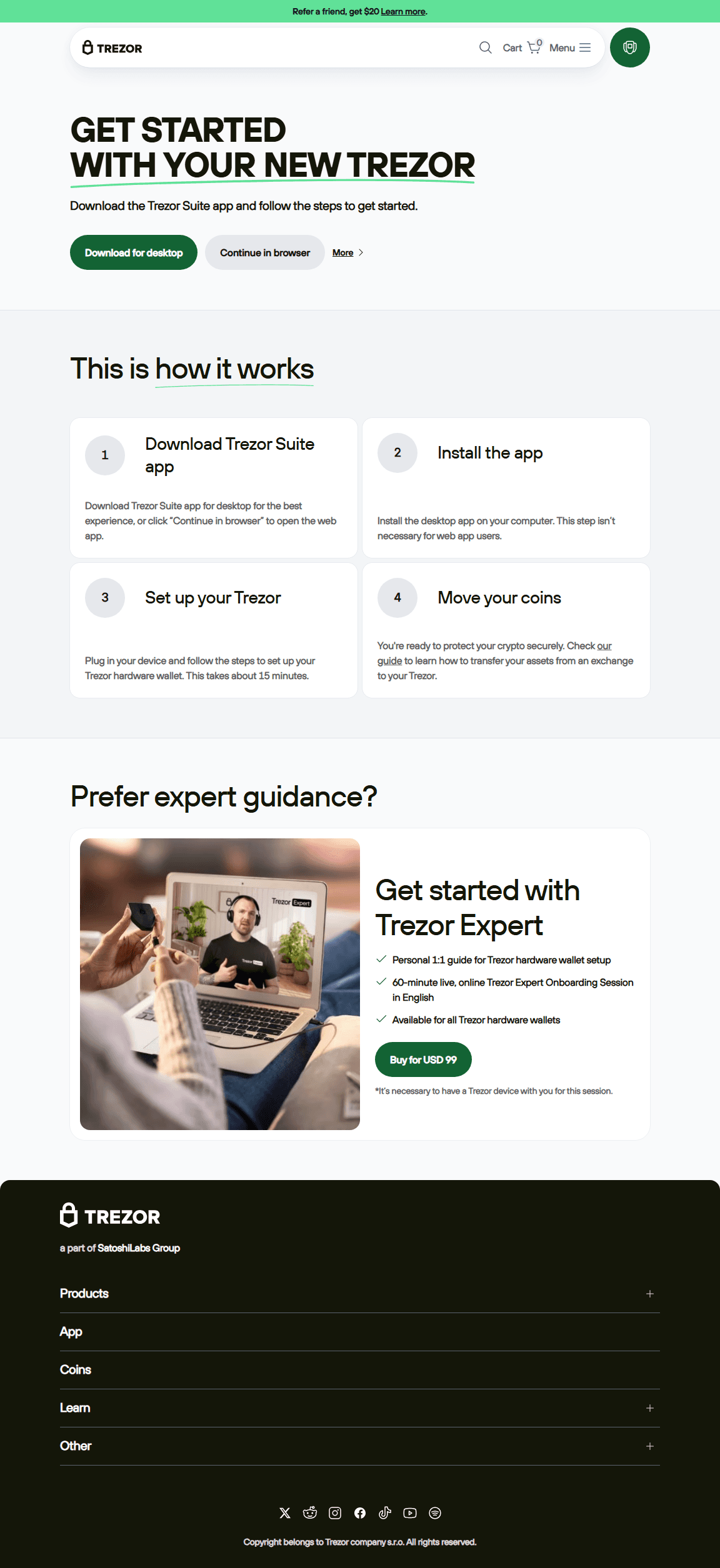
Trezor.io/Start – Your Updated Guide to Setting Up a Trezor Hardware Wallet
Cryptocurrency security is becoming more important than ever, and using a hardware wallet is one of the safest ways to protect your digital funds. If you’ve recently purchased a Trezor hardware wallet, Trezor.io/start is the official page that walks you through every step of the initial setup. This newly revised guide provides a fresh, detailed explanation of how the process works and what you need to do to keep your assets safe.
What Is Trezor.io/Start?
Trezor.io/start is the official onboarding portal created by Trezor for first-time users. It provides setup instructions for both Trezor Model One and Trezor Model T. The page helps new users install Trezor Suite, update device firmware, set up a secure PIN, and generate a recovery seed. This is the safest, most trusted place to initialize your wallet because it ensures you are following verified, authentic steps.
Avoid third-party websites claiming to offer setup guidance, as they may provide incorrect information or attempt to steal your seed phrase.
What You’ll Need Before Starting
Before visiting Trezor.io/start, prepare the following:
Your Trezor hardware wallet
A computer or laptop with internet access
A USB cable compatible with your Trezor model
An updated browser (Chrome, Firefox, Brave, or Edge)
A safe place to write and store your recovery seed
Optional: A second secure location for backup storage
Having everything ready will help you move through the setup process without delays.
Step 1: Go to Trezor.io/Start
Open your browser and type Trezor.io/start directly into the address bar. Double-check the spelling to ensure you’re on the official page. Once the page loads, you’ll see instructions tailored to your specific Trezor device.
If your device is already connected, the page may automatically detect it and offer immediate setup options.
Step 2: Download and Install Trezor Suite
To operate your Trezor device, you’ll need Trezor Suite, the official software for managing your crypto assets. You will see download buttons for Windows, macOS, and Linux.
What Trezor Suite Offers
Secure crypto management
Clear portfolio overview
Built-in transaction verification
Privacy tools such as Tor integration
A clean, user-friendly interface
Support for most major cryptocurrencies
Once installed, open Trezor Suite to continue the setup process.
Step 3: Connect Your Hardware Wallet
Use the USB cable that came with your device to connect it to your computer. Trezor Suite will immediately detect the device and check if any firmware updates are required.
Firmware updates are normal, especially on new devices, and they ensure your wallet has the latest security enhancements. Follow the on-screen instructions to apply any available update.
Step 4: Choose “Create New Wallet”
After the software recognizes your device, you will be given the option to:
Create a new wallet
Recover an existing wallet
Select Create new wallet if you are setting up the device for the first time. This will begin the process of generating a secure backup known as your recovery seed.
Step 5: Secure Your Recovery Seed
Your Trezor device will now display a series of words—your Recovery Seed. Depending on your settings, this may be 12, 18, or 24 words. This seed is the most important part of your wallet security.
Follow These Recovery Seed Rules
Write the seed on paper only
Never type it into any digital device
Never take a picture or screenshot
Do not store it online or in cloud storage
Keep it in a secure, offline location
Consider creating a second copy for redundancy
Your recovery seed is the only way to restore your wallet if your device is lost or damaged.
Step 6: Set Your Device PIN
After generating your recovery seed, you’ll be prompted to create a PIN. This PIN protects your wallet from unauthorized physical access. Choose a PIN that is not easily guessed and avoid patterns such as repeated numbers or simple sequences.
You will enter your PIN each time you connect your Trezor device.
Step 7: Access the Trezor Suite Dashboard
Once your device is initialized, you will be directed into the Trezor Suite dashboard. From here you can:
Add cryptocurrency accounts
View balances
Send and receive crypto
Track portfolio performance
Organize multiple assets
Explore privacy and security settings
The dashboard is easy to navigate, even for beginners.
Best Security Practices After Setup
Setting up your Trezor is only the first step. To maintain strong long-term security, follow these recommendations:
Keep your recovery seed hidden and offline
Never share your PIN or seed with anyone
Regularly update Trezor Suite and device firmware
Verify all transaction details on the Trezor device screen
Use a strong passphrase if you want an extra security layer
Avoid connecting your hardware wallet to untrusted computers
Following these best practices will ensure your assets remain safe.
Troubleshooting and Common Issues
Device Not Recognized
Try switching USB ports or using a different cable. Restart Trezor Suite if necessary.
Firmware Update Problems
Disconnect and reconnect the device, then restart your computer before retrying.
Seed Words Not Working
Ensure each word is spelled correctly and recorded in the correct order.
Final Thoughts
The process at Trezor.io/start is designed to give users a secure and straightforward introduction to hardware wallet usage. By following the official steps and storing your recovery seed safely, you create one of the most secure environments possible for your cryptocurrency. Trezor’s combination of physical security and user-friendly software makes it a trusted choice for long-term crypto storage.
Trezor.io/Start – Your Updated Guide to Setting Up a Trezor Hardware Wallet
Cryptocurrency security is becoming more important than ever, and using a hardware wallet is one of the safest ways to protect your digital funds. If you’ve recently purchased a Trezor hardware wallet, Trezor.io/start is the official page that walks you through every step of the initial setup. This newly revised guide provides a fresh, detailed explanation of how the process works and what you need to do to keep your assets safe.
What Is Trezor.io/Start?
Trezor.io/start is the official onboarding portal created by Trezor for first-time users. It provides setup instructions for both Trezor Model One and Trezor Model T. The page helps new users install Trezor Suite, update device firmware, set up a secure PIN, and generate a recovery seed. This is the safest, most trusted place to initialize your wallet because it ensures you are following verified, authentic steps.
Avoid third-party websites claiming to offer setup guidance, as they may provide incorrect information or attempt to steal your seed phrase.
What You’ll Need Before Starting
Before visiting Trezor.io/start, prepare the following:
Your Trezor hardware wallet
A computer or laptop with internet access
A USB cable compatible with your Trezor model
An updated browser (Chrome, Firefox, Brave, or Edge)
A safe place to write and store your recovery seed
Optional: A second secure location for backup storage
Having everything ready will help you move through the setup process without delays.
Step 1: Go to Trezor.io/Start
Open your browser and type Trezor.io/start directly into the address bar. Double-check the spelling to ensure you’re on the official page. Once the page loads, you’ll see instructions tailored to your specific Trezor device.
If your device is already connected, the page may automatically detect it and offer immediate setup options.
Step 2: Download and Install Trezor Suite
To operate your Trezor device, you’ll need Trezor Suite, the official software for managing your crypto assets. You will see download buttons for Windows, macOS, and Linux.
What Trezor Suite Offers
Secure crypto management
Clear portfolio overview
Built-in transaction verification
Privacy tools such as Tor integration
A clean, user-friendly interface
Support for most major cryptocurrencies
Once installed, open Trezor Suite to continue the setup process.
Step 3: Connect Your Hardware Wallet
Use the USB cable that came with your device to connect it to your computer. Trezor Suite will immediately detect the device and check if any firmware updates are required.
Firmware updates are normal, especially on new devices, and they ensure your wallet has the latest security enhancements. Follow the on-screen instructions to apply any available update.
Step 4: Choose “Create New Wallet”
After the software recognizes your device, you will be given the option to:
Create a new wallet
Recover an existing wallet
Select Create new wallet if you are setting up the device for the first time. This will begin the process of generating a secure backup known as your recovery seed.
Step 5: Secure Your Recovery Seed
Your Trezor device will now display a series of words—your Recovery Seed. Depending on your settings, this may be 12, 18, or 24 words. This seed is the most important part of your wallet security.
Follow These Recovery Seed Rules
Write the seed on paper only
Never type it into any digital device
Never take a picture or screenshot
Do not store it online or in cloud storage
Keep it in a secure, offline location
Consider creating a second copy for redundancy
Your recovery seed is the only way to restore your wallet if your device is lost or damaged.
Step 6: Set Your Device PIN
After generating your recovery seed, you’ll be prompted to create a PIN. This PIN protects your wallet from unauthorized physical access. Choose a PIN that is not easily guessed and avoid patterns such as repeated numbers or simple sequences.
You will enter your PIN each time you connect your Trezor device.
Step 7: Access the Trezor Suite Dashboard
Once your device is initialized, you will be directed into the Trezor Suite dashboard. From here you can:
Add cryptocurrency accounts
View balances
Send and receive crypto
Track portfolio performance
Organize multiple assets
Explore privacy and security settings
The dashboard is easy to navigate, even for beginners.
Best Security Practices After Setup
Setting up your Trezor is only the first step. To maintain strong long-term security, follow these recommendations:
Keep your recovery seed hidden and offline
Never share your PIN or seed with anyone
Regularly update Trezor Suite and device firmware
Verify all transaction details on the Trezor device screen
Use a strong passphrase if you want an extra security layer
Avoid connecting your hardware wallet to untrusted computers
Following these best practices will ensure your assets remain safe.
Troubleshooting and Common Issues
Device Not Recognized
Try switching USB ports or using a different cable. Restart Trezor Suite if necessary.
Firmware Update Problems
Disconnect and reconnect the device, then restart your computer before retrying.
Seed Words Not Working
Ensure each word is spelled correctly and recorded in the correct order.
Final Thoughts
The process at Trezor.io/start is designed to give users a secure and straightforward introduction to hardware wallet usage. By following the official steps and storing your recovery seed safely, you create one of the most secure environments possible for your cryptocurrency. Trezor’s combination of physical security and user-friendly software makes it a trusted choice for long-term crypto storage.